Skip to content
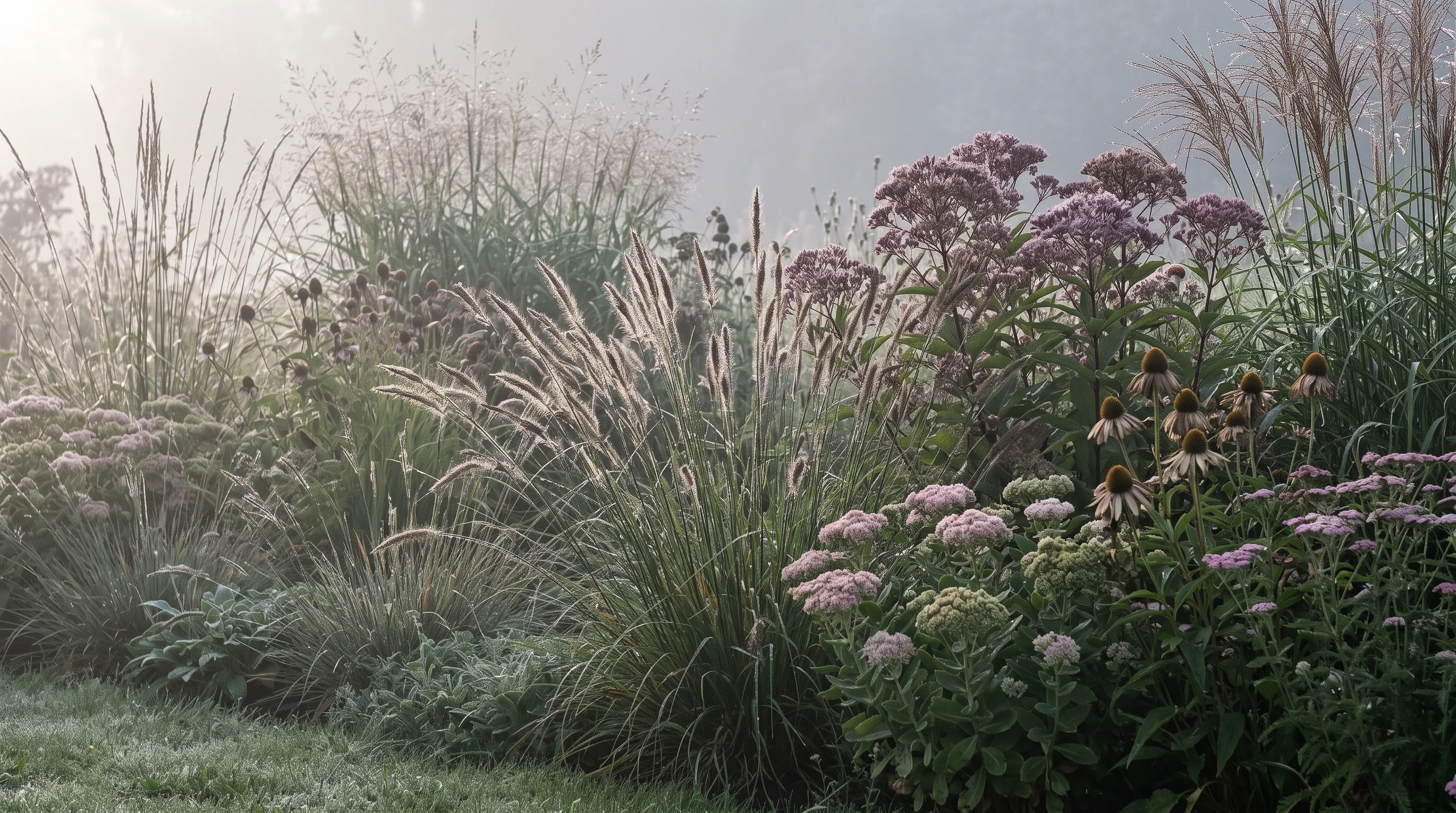
A naturalistic perennial border in a Stroud valley garden in August, grasses backlit by low morning light with mist lying in the valley behind
August — Year Two A valley garden, Stroud

Field book — opened 17 August 2026

Field Notes Landscapes

Garden design and build, Stroud

This page opens to the month you arrive in. It is August: Miscanthus coming into flower, Phlomis already in seed, mist due back in the valley by the month's end. We design gardens to be worth photographing in all twelve.

Fig. 01–04 — one viewpoint, year one

One border, four seasons

One planting scheme in a Stroud valley garden, photographed from the same tripod position through its first year. October and January are not the off-season here; they are the design.

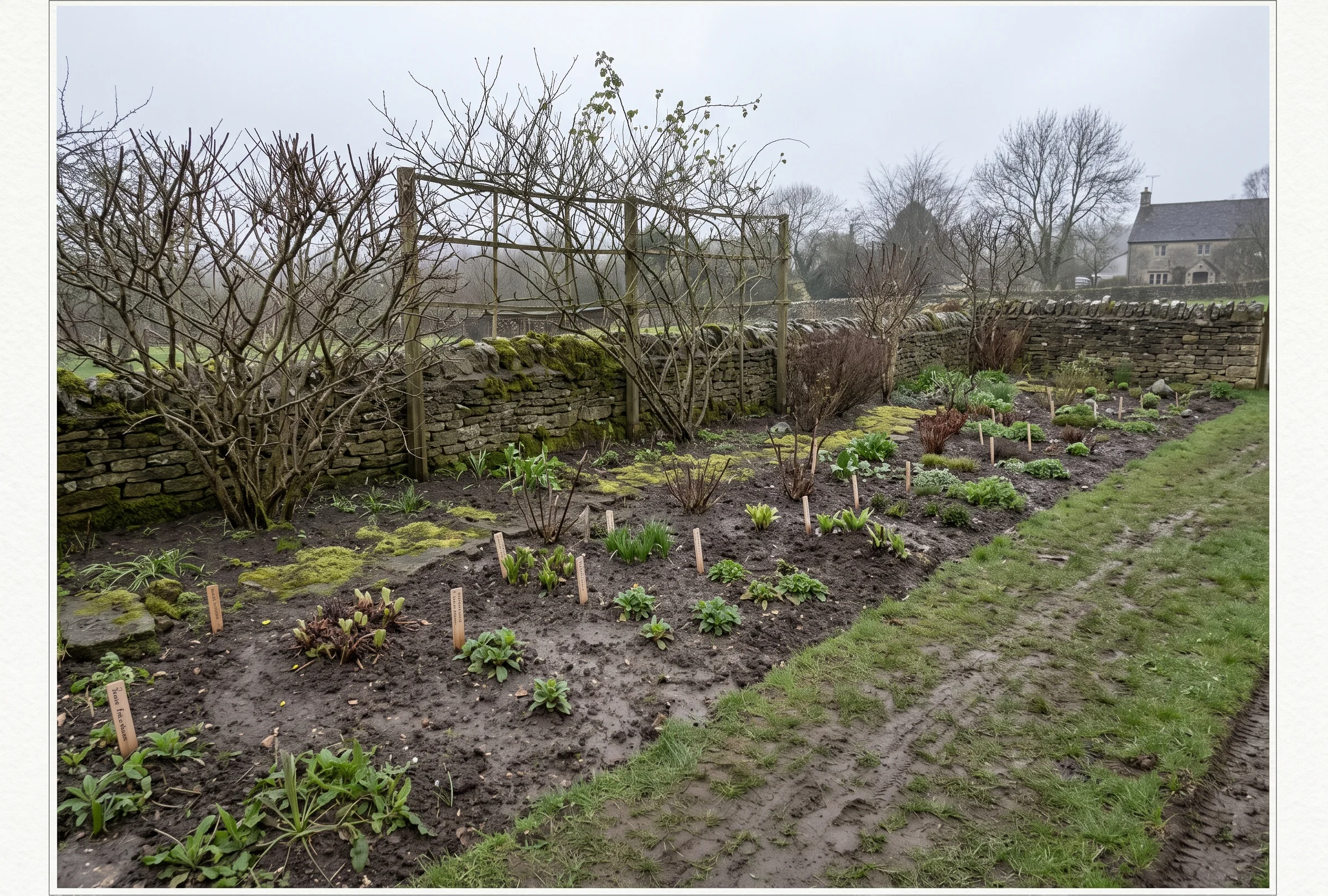
March — Year One
The border in March of its first year: bare soil, first green shoots and small clipped yew forms under flat spring light

Cut back in late February; Sesleria and the first bulbs move before anything else.

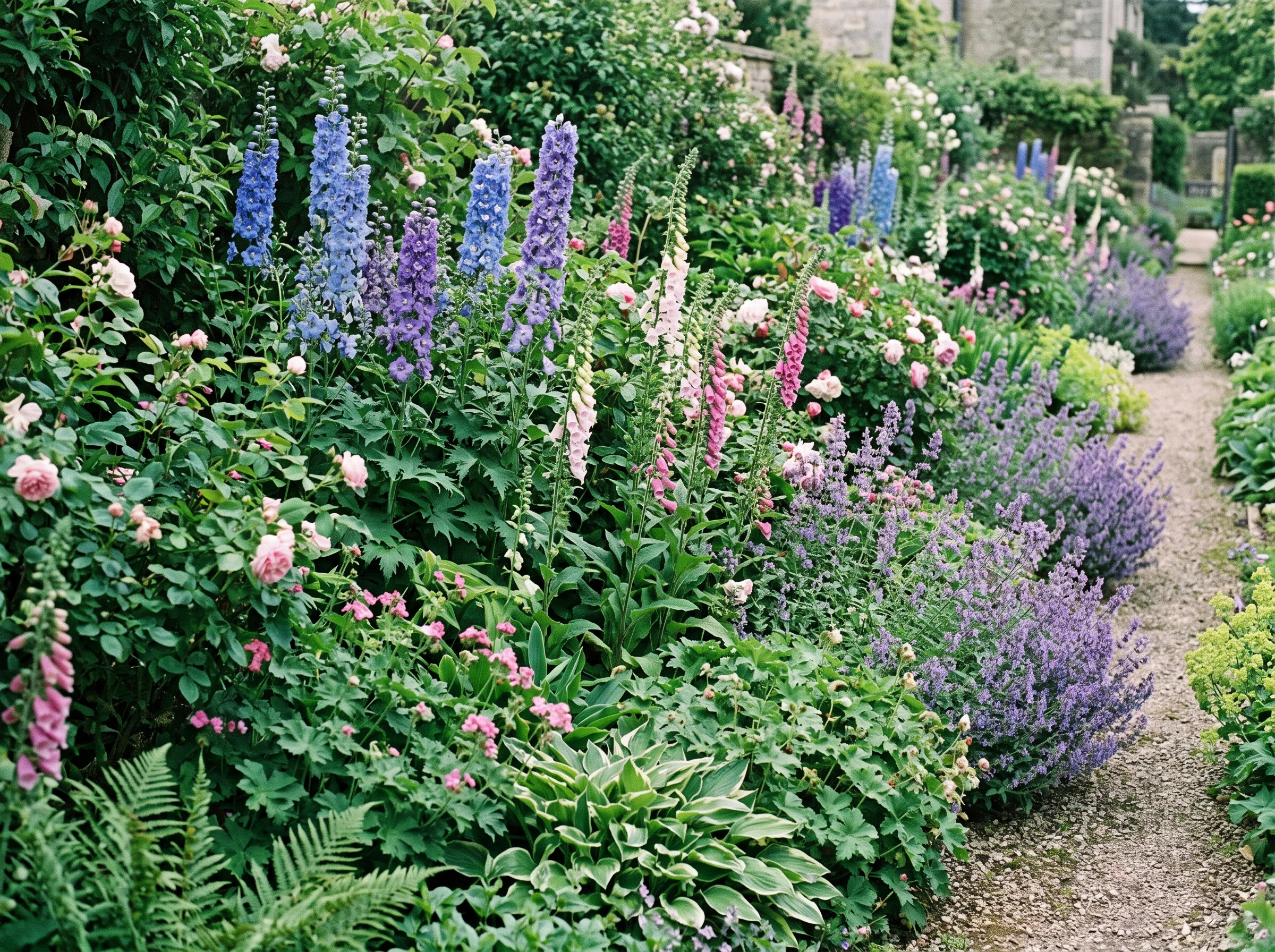
June
The same border in June, at full flush with violet and crimson perennials among green grasses

Full flush — Salvia ‘Caradonna’ and Knautia carrying the colour, the grasses still green.

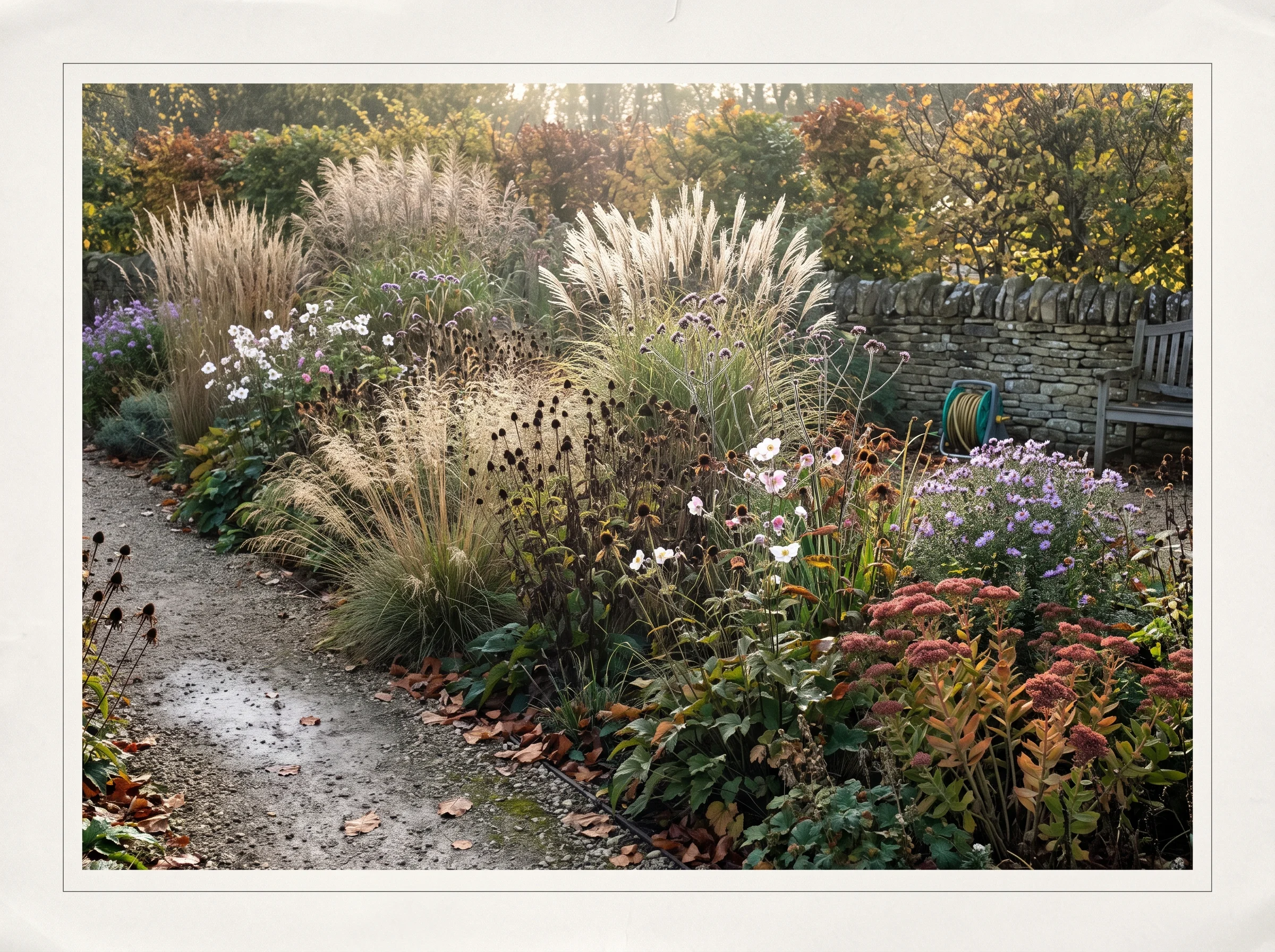
October
The same border in October, grasses backlit to parchment by low morning sun with faint mist behind

Low sun behind Miscanthus and Molinia. The border’s best month, not its last.

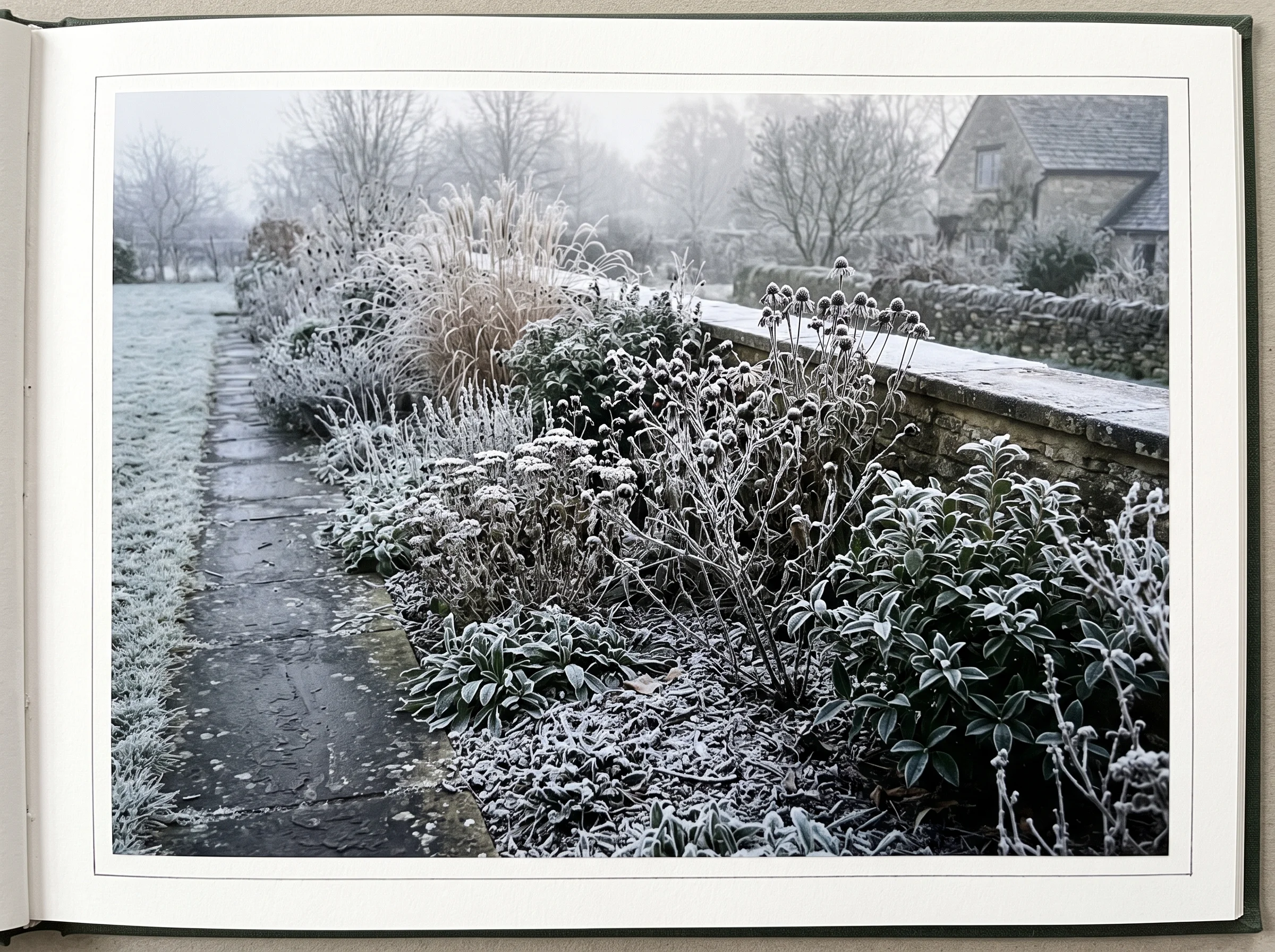
January
The same border in January, hoar frost picking out every standing seedhead against pale mist

Hoar frost on Phlomis and Echinacea. Nothing is cut until the new growth asks.

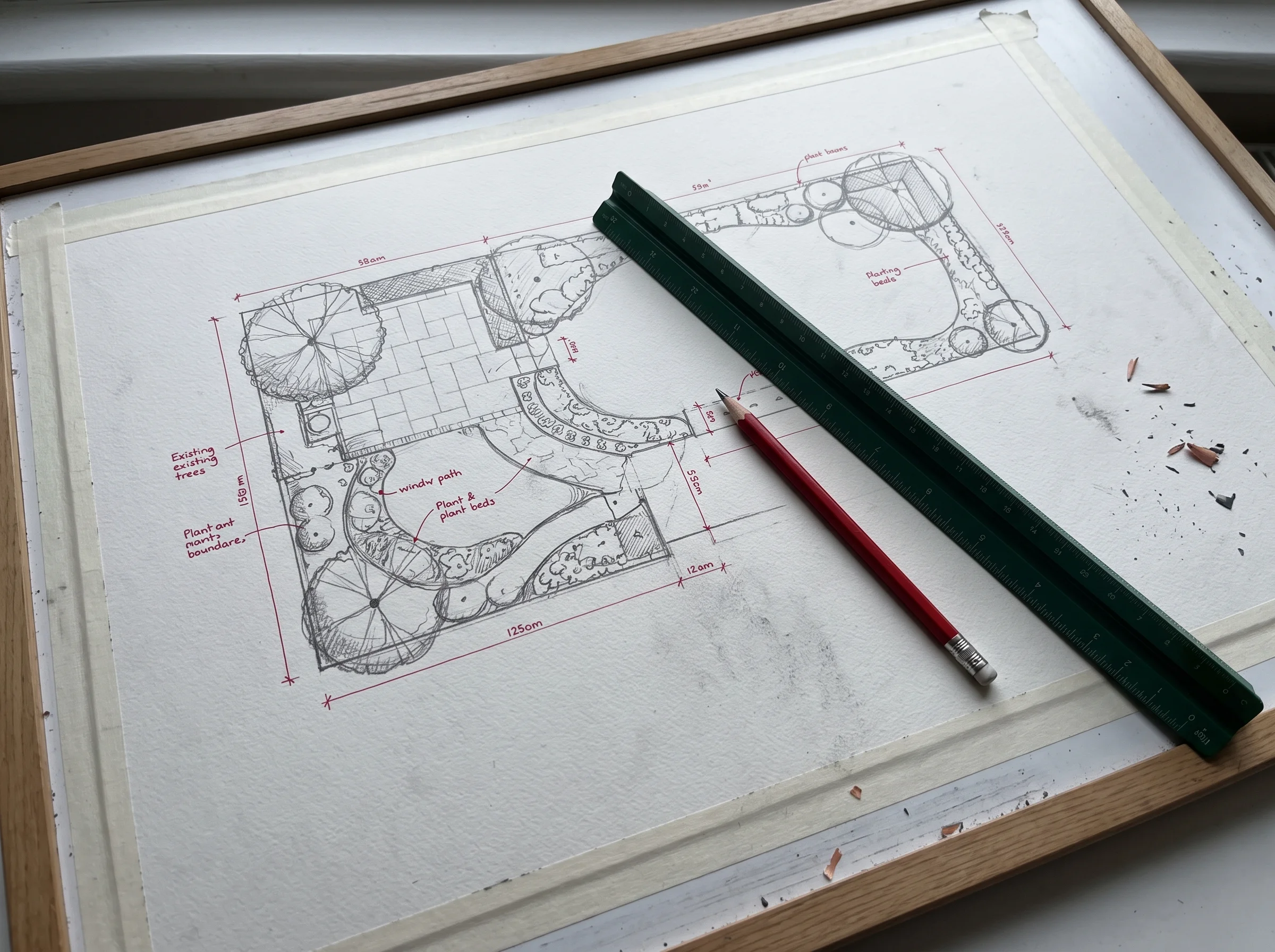
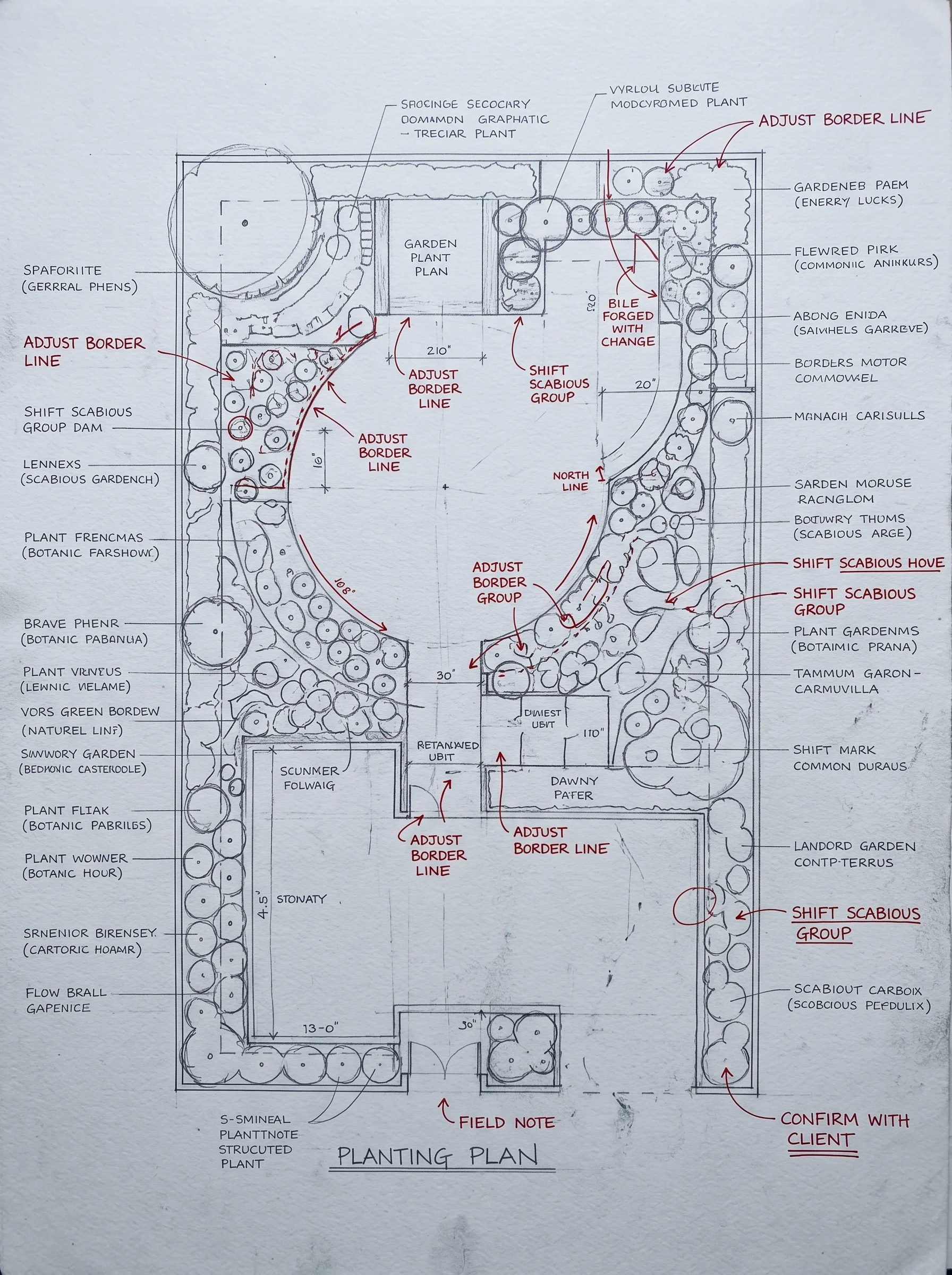
A hand-annotated planting plan on drawing paper with fine pencil lettering, dimensions and red pencil marks
Planting plan, drawn at 1:50 — every client keeps theirs.

The practice

What four-season planting means

Not a phrase on a list — a way of drawing. Every scheme we plant is a naturalistic perennial planting composed for the Cotswold year, designed to hold its shape in January as well as July.

  • I — Structure

    A third of every scheme is chosen for its winter skeleton — grasses, standing seedheads, clipped evergreen forms. What holds the border in January is what holds the eye in July.

  • II — Succession

    Something is always arriving. Bulbs come up through the emerging perennials; Aster and Miscanthus are held back for the months most planting has given up on.

  • III — Restraint

    Nothing is cut down in autumn. The faded architecture of Phlomis, Eryngium and Hylotelephium is the winter garden — it was drawn that way, and it stands until late February.

Every plan starts as a measured drawing — see the method.

Entries from the field book

Selected works

Three gardens, each shown in the month that tests it rather than the month that flatters it.

Courtyard, Stroud — February
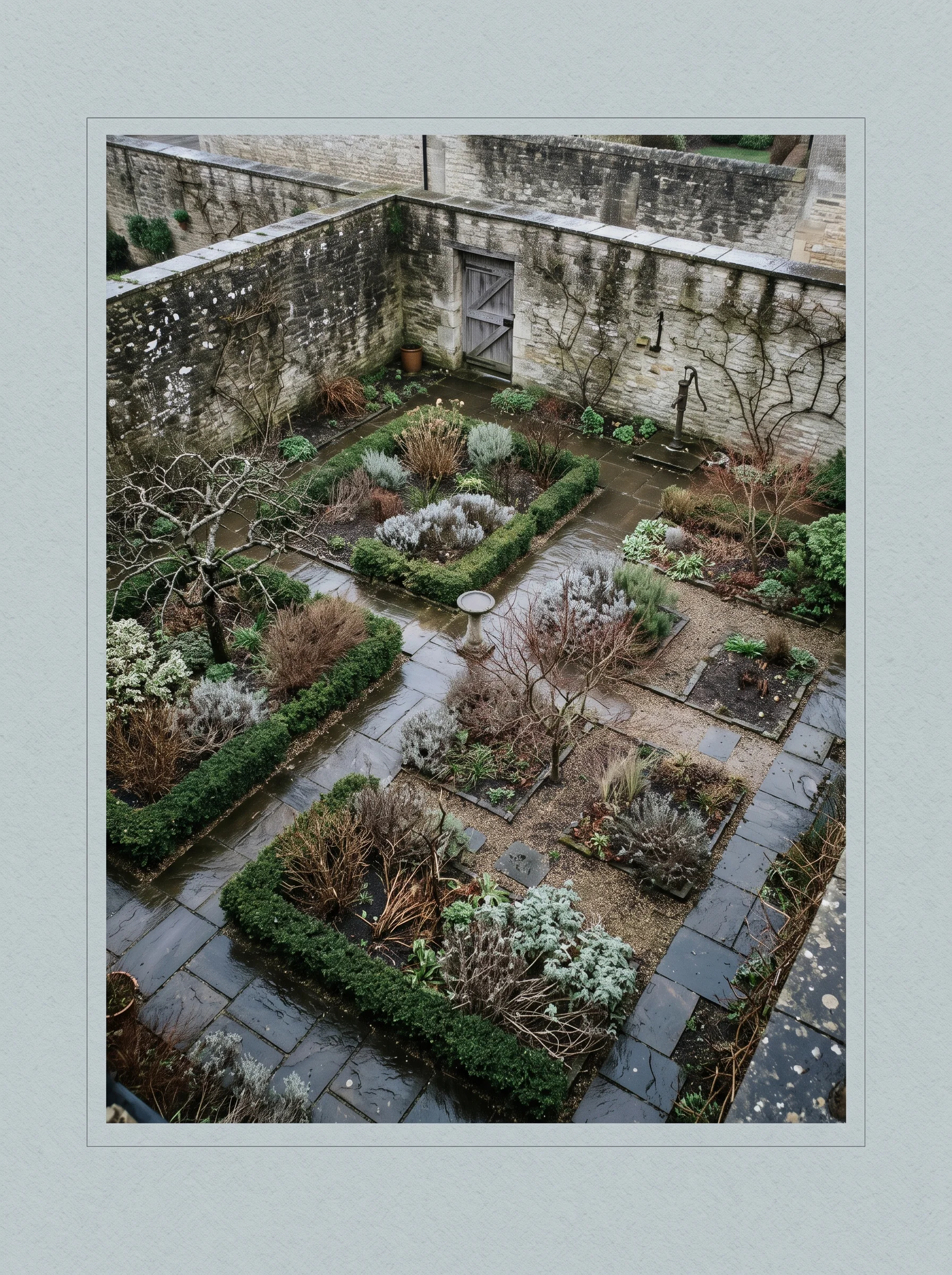
A walled Cotswold-stone courtyard garden seen from an upstairs window in February, wet limestone setts and clipped yew showing its structure

Nine metres by seven, walled on three sides — courtyard garden design photographed from the landing window in the month a courtyard has nowhere to hide. Clipped yew, reclaimed limestone setts, Hakonechloa standing in its parchment phase. The bones were drawn first; February is their audit.

9.0 × 7.0 m — walled on three sides
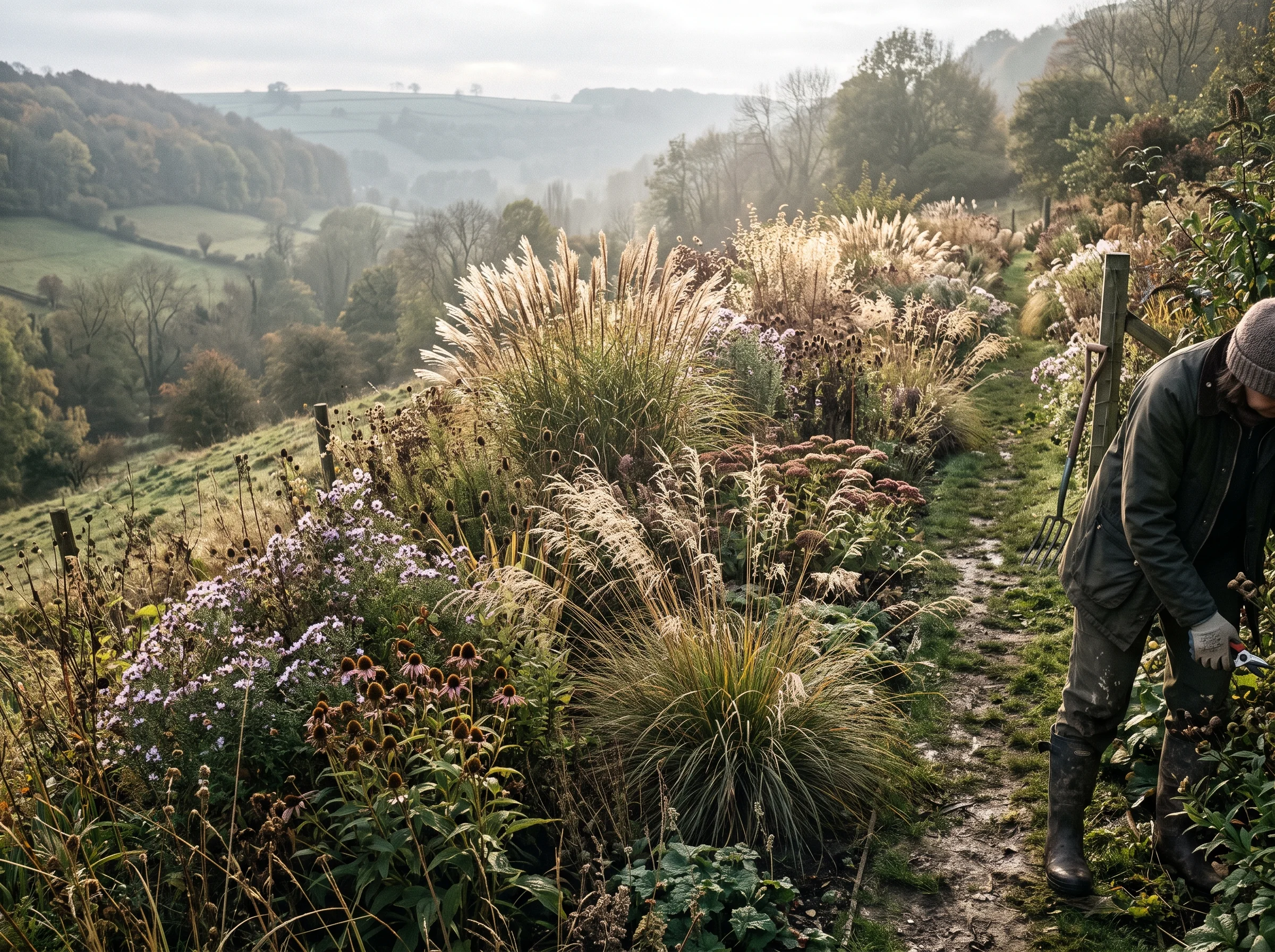
Valley-edge border, Stroud — October

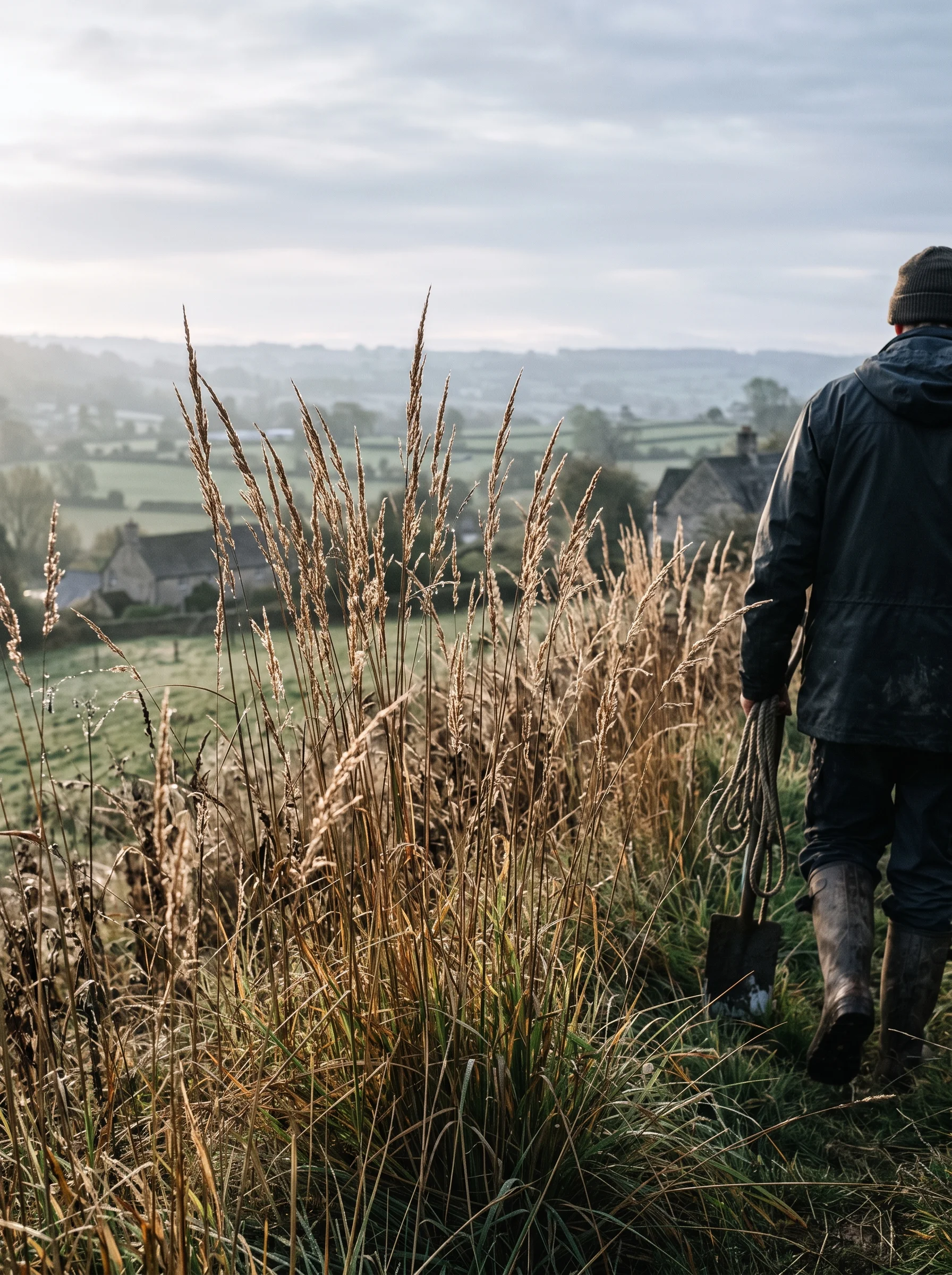
A long naturalistic border on a Stroud valley edge in October, seedheads backlit by low sun with muddy boots at the frame's corner

A perennial planting scheme run along a falling boundary and read against the valley mist. Molinia and Sanguisorba backlit at eight in the morning; the boots in the corner belong to the October round of first-year photographs.

40 m run — photographed monthly, year one

Farmhouse terrace, Stroud valleys — November

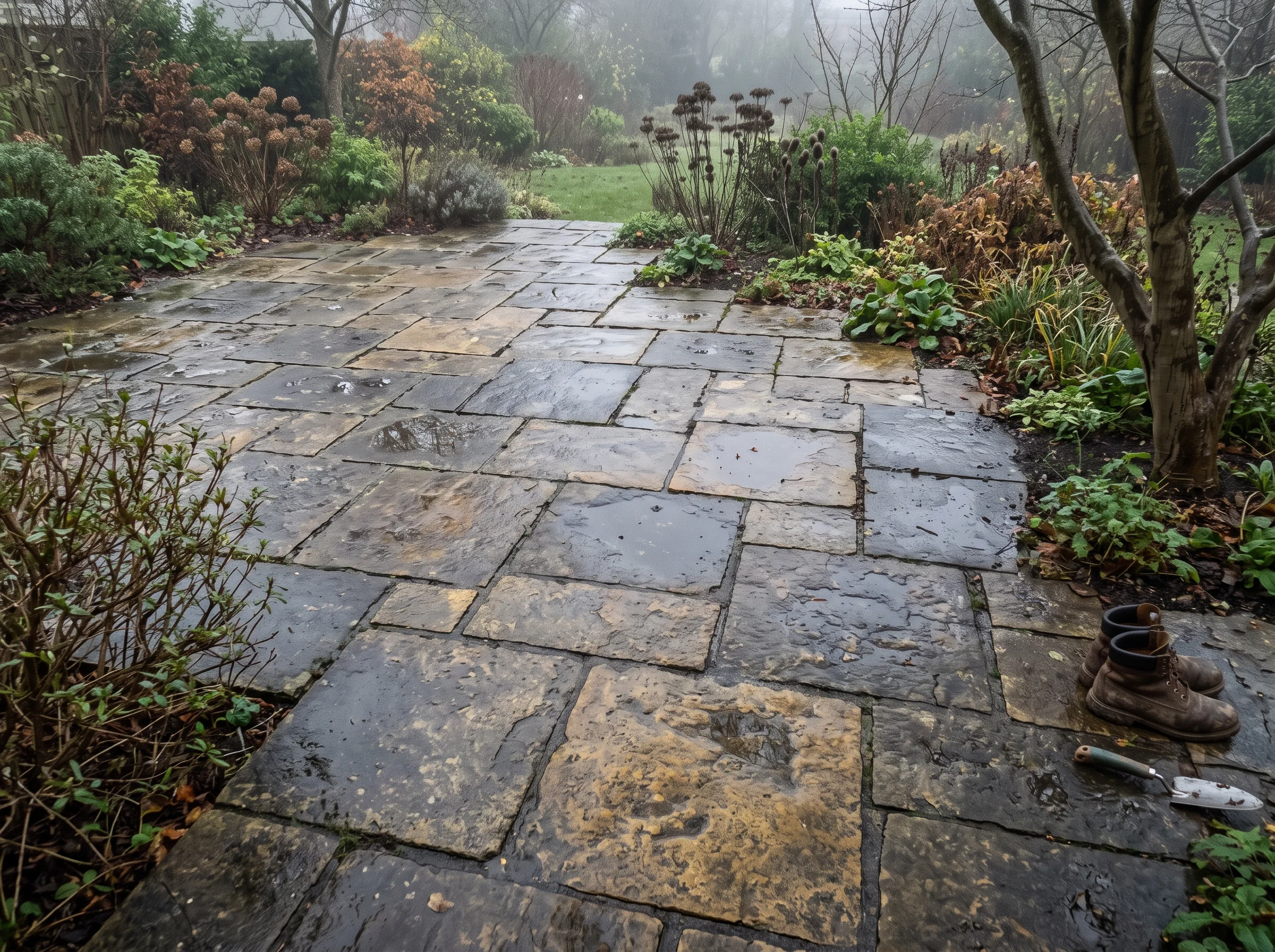
A reclaimed Cotswold limestone terrace darkened after November rain, planting growing in the open joints

A natural stone terrace in reclaimed Cotswold limestone, laid to falls and left unsealed — it darkens after rain, which is when we photograph it. The planting is pulled tight into the joints: Erigeron, thyme, self-sown Verbena.

Laid to falls — 1:80

Method

Drawn before dug

Every garden here is drawn before it is dug. Garden design, full landscape build and the first year’s care, in the order it happens — the same hand on the survey, the drawing and the spade.

A drawing board holding a measured garden survey in fine pencil, with a scale rule and red pencil beside the sheet
The first drawing — levels, light, lines of sight.
  1. Walk and survey

    We walk the garden with you, then measure it properly — levels, aspect, where the frost pools and the wind funnels.

  2. Measured drawing

    The design is drawn to scale before anything is priced or dug; you see precisely what you are agreeing to.

  3. Planting plan

    Every plant placed and named on paper, in our own hand — and the plan is yours to keep.

  4. Build and aftercare

    We build it, tend its first year of establishment, and return in year three. That visit is part of every build.

Est. 2021 · Drawn at 1:50 · Insured — £5m public liability

Kept with the photographs

Noted

“The grasses in December are the reason we chose them.”

R., Rodborough — Year Two

“The planting plan hangs framed in our hallway. Visitors ask about it before they have seen the garden.”

H., Chalford — Year One

“They came back in January to photograph the frost. We hadn’t asked. The border had.”

S., Stroud — Year Three

4.9 / 5 on Google — 57 reviews, all seasons

August 2026 — Stroud

Begin a conversation

Tell us where the garden is and what you would like it to become. We’ll come and walk it with you — whatever the month says.

A village, a lane, a postcode — enough to find the gate.

Its size, its aspect, what it does in winter — anything you have noticed.

The studio keeps Monday to Friday, 08:00–16:30. We design and build across Stroud and the Five Valleys.

We would rather walk the garden with you than describe it.

Backlit grasses along a Stroud valley edge in late October, a figure in muddy boots just leaving the frame
Late October — a valley edge, Stroud